After the Tills Close: Six Corby Shops That Become the Town’s Living Rooms
Corby has never been fussy about where a good gathering happens. A pub, a hall, a kitchen, a corner of a shop with the stock shifted two feet to the left — if there’s a kettle and a few chairs, the town will make it work. In 2026, some of the most interesting club nights in Corby aren’t in club venues at all. They’re in shops.
Not pop-ups. Not empty units turned into arts centres. Working shops, with tills and stock and opening hours, that have decided to keep the lights on a bit longer and let the town in. Here are six of them — and what they’ve learned about being a shop that also feels like a living room.
The Book Room at Chapter & Verse, Corporation Street
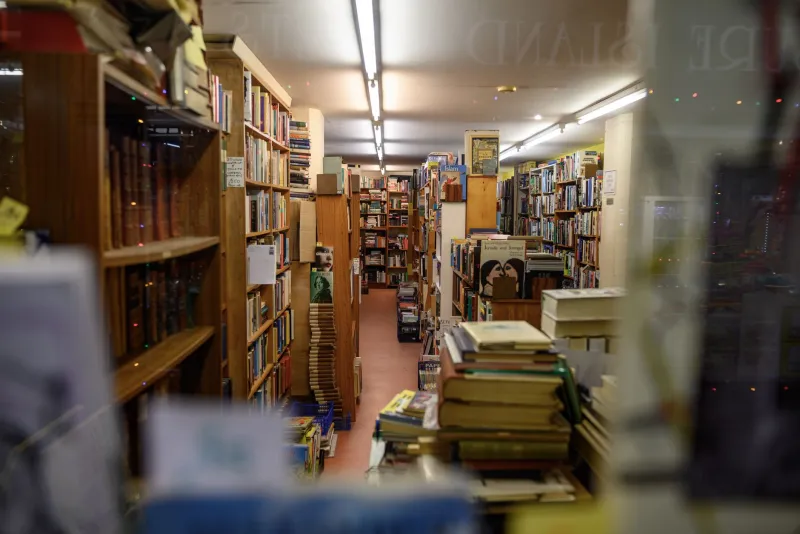
Chapter & Verse is a proper bookshop: tight shelves, handwritten staff picks, a faint smell of paper and coffee. The book group started in 2024 after a customer asked whether there was one locally and the owner, Mags, said, ‘Not yet.’
It runs on the second Tuesday of the month, after the shop closes. The poetry shelf gets wheeled aside, eight folding chairs come out of the back, and the group takes over the middle of the floor. There’s no fee. There is, however, a gentle understanding: the shop is still a shop. Mags doesn’t hide the till. She doesn’t pretend the books are decoration.
‘We don’t charge for the room because it isn’t a room,’ she says. ‘It’s the shop. People buy the book we’re discussing, or they buy a card, or they come back the next week. The club earns trust. The shop earns a living. You need both.’
Dice & Slice on George Street
Board-game shops can be intimidating places if you don’t know your meeples from your elbows. Dice & Slice gets around that with a Thursday night opened table. Bring nothing, pay £3 towards the squash and biscuits, and someone will teach you something.
The owner, Tom, started it as a demo night for new stock. It turned into a regular crowd. Now the tables sit between the shelves, not in a separate room, so the games are literally part of the shop. Families come early, the serious players stay late, and the shop still sells games because people have played them first.
‘The best advert is a table full of people having a laugh,’ Tom says. ‘We’re not a café. We’re not a bar. We’re a shop that clears a bit of floor and puts the kettle on. The retail bit doesn’t stop. It just gets a bit more sociable.’
The Wool Shed, Priors Hall
Saturday morning at The Wool Shed is a quiet sort of busy. The knitting circle started in 2021, when click-and-collect queues meant people lingered at the door. Jan, the owner, put out two chairs. Then four. Then someone brought a flask.
Now it’s 10am to noon, every Saturday, around the big table at the back. Knitters, crocheters, people who haven’t touched a needle since school and people who can turn a heel without looking. They buy yarn. They ask questions. They drink tea. The shop doesn’t stop serving customers who aren’t in the circle, and the circle doesn’t expect the shop to become a craft hall.
‘We clear the window seat and move the basket display,’ Jan says. ‘That’s it. The shop is still a shop. We just make it obvious that you’re allowed to sit down. That’s the whole trick. Permission.’
Café Verde on Rockingham Road
Café Verde is a deli and grocery shop first — tins, olives, coffee, the good crackers — but on Wednesday evenings the tables are cleared at six and the language swap begins. English, Portuguese, Polish, a bit of Italian. Corby has always been a town of accents, and this is one of the places where that shows.
Elena, who runs it, started the swap after two regulars realised they were both trying to learn each other’s first language. It began with four people and a phrasebook. Now it’s a dozen on a good week, with a rule that you buy a drink and you don’t correct anyone mid-sentence unless they ask.
‘We don’t charge for the table,’ Elena says. ‘But we do ask people to buy a coffee. It’s fair. The shop pays for the lights. The swap pays back in something else — people come in the next day for bread, or they bring their family. It’s not separate from the business. It’s part of it.’
Vinyl Countdown, Oakley Road
First Friday of the month, Vinyl Countdown shuts at seven and reopens at half past for a listening club. Bring a record, play one side, talk about it. No DJ, no bar, no stage. Just the shop’s turntable and a circle of chairs between the racks.
Danny, the owner, says it started because he was sick of people saying record shops were intimidating. ‘I wanted to make the shop feel like someone’s front room, but with better stock.’ The till stays open for the first hour. People buy records. People also just listen, which is allowed.
‘We don’t pretend we’re a venue,’ he says. ‘We’re a shop with a listening club. The shutters are half down. The lights are on. It’s still retail. But it’s also a place to be on a Friday night that isn’t a pub or a sofa.’
The Little Plant Shop, Cottingham Road
Sunday mornings at The Little Plant Shop are for the garden club, which is really a plant swap with better labelling. Owner Priya started it when she had too many tomato seedlings and no idea what to do with them. Now there’s a repotting table, a box for cuttings, and a steady stream of people who want to talk about compost.
The club is free, but the shop sells compost, pots and the kind of houseplant that doesn’t die when you look at it. Priya says the balance is simple: the club brings people in, the shop gives them something to buy if they want to. Nobody is asked to spend.
‘A shop has to be useful first,’ she says. ‘If people feel like they’re being sold to, they won’t stay. If they feel like they can just be here, they’ll come back. And they do. With cuttings.’
What it takes to make a shop feel like a living room
None of these six businesses have a secret formula. They have a few things in common: a regular time, a clear invitation, a low or no fee, and a firm grip on the fact that the shop still has to pay its way. The retail purpose doesn’t vanish when the chairs come out. It becomes the backdrop.
That’s the quiet genius of it. Corby’s club scene doesn’t have to be all halls and function rooms. Sometimes it’s the back of a bookshop, the middle of a board-game shop, the window seat of a wool shop. Look for the noticeboard. Ask if there’s a night. The shop floor is a meeting room — you just have to know when to move the stock.