The Quiet Ways In: Corby’s Cut-Throughs, Alleyways and Unofficial Front Doors
Corby is a town that likes a proper entrance. The Cube, the shopping centre, the station, the big roundabouts that announce you have arrived. But ask anyone who actually lives here how they get from the estates into the centre and you will get a different map. One that includes a gap in a hedge, a flight of steps behind a car park, a footbridge, a path that runs along the back of something. These are the quiet ways in.
The map in your head
Listen to a Corby conversation about directions and you will notice something. People rarely start with street names. They start with landmarks. Go past the chippy, cut through by the shops, over the bridge, left at the kettle. It sounds like a riddle. It is actually a highly efficient local language, built up over years of walking the same routes to school, to work, to the bus stop, to a mate’s house.
That language matters because Corby’s estates are not laid out like a grid. They curve and loop and double back. The official road route between two points can be long and dull. The walking route can be short and interesting. The shortcut is not a secret, exactly. It is just not signposted. It lives in the heads of people who have worn the path down over time.
A few routes worth knowing
You do not need a full A to Z to understand the principle. From Beanfield, there is a path that skirts the edge of the green space and brings you out much closer to town than the main road suggests. From Kingswood, a footpath behind the houses drops you near the retail park and saves you the long walk round. From Hazel Leys, there is an alley that feels like a mistake the first time you use it and like an old friend the second. From Danesholme, the route by the green is the one dog walkers know and drivers never see.
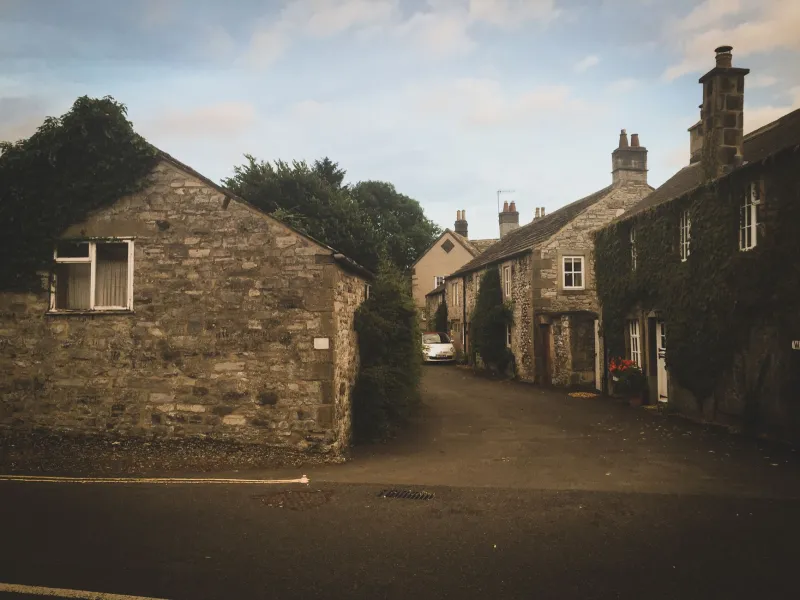
These are not grand promenades. They are practical. A bit of pavement, a bit of tarmac, a gap between fences, a stretch where the hedge leans in. Some are lit. Some are not. Some are busy at school run time and empty at dusk. The point is not that they are beautiful. The point is that they work.
The folklore of the footpath
Every town has stories about its in-between places, and Corby is no different. There is the path that is always five degrees colder than the rest of the street. The alley where the wind funnels so reliably that people swear it has its own weather system. The shortcut that only works one way because of a gate that is stiff, or a kerb that is high, or a turn that is easy to miss in the dark.
There is a story, probably half true and probably half invented on a wet Tuesday, that one of the paths follows the line of an old route to the steelworks. When the new town took shape in the 1950s, the estates were built around existing habits as much as fresh plans. People walked to work, to school, to the shops. The paths followed the people. The people followed the paths. That is how a shortcut becomes a tradition.
You can still feel that history in the way some routes ignore the road layout entirely. They are not designed for cars. They are designed for legs. They connect the bits of the town that cars have to go round.
Why they feel like front doors
A front door is not just an entrance. It is a welcome. These paths do the same job. They say: we expected you. They bring you into a neighbourhood past back gardens and kitchen windows, past bins and bike sheds, past the small ordinary details of other people’s lives. You arrive not through a grand gateway but through the side gate, and somehow that feels more honest.
That is why people get oddly fond of them. They are the routes you use when you are not performing. No one dresses up for the cut-through. You use it to get home, to get to the shops, to meet someone, to clear your head. It is the town at its most everyday and most itself.
A practical note
If you are new to Corby, the best way to learn the quiet ways is to ask. Ask a neighbour. Ask the person behind you in the queue. Ask the dog walkers. They will not give you a postcode. They will give you a landmark, a turn, and probably a warning about the puddle. Take the advice. Walk it once in daylight. Then walk it again because you have already forgotten the bit after the bridge.
The usual etiquette applies. Say hello. Give way. Keep the noise down if you are passing houses late at night. If you cycle, go steady. Take your litter home. These paths only stay pleasant if the people who use them look after them.
The last turn
Corby’s quiet ways in are not really secret. They are just under-celebrated. They are the paths that take you past the chippy and round the back of the kettle, the routes that make the town feel smaller and friendlier than the road signs suggest. They are the unofficial front doors. And once you know them, you are not just visiting Corby. You are in it.